Ancient Egyptian Symbols and Names
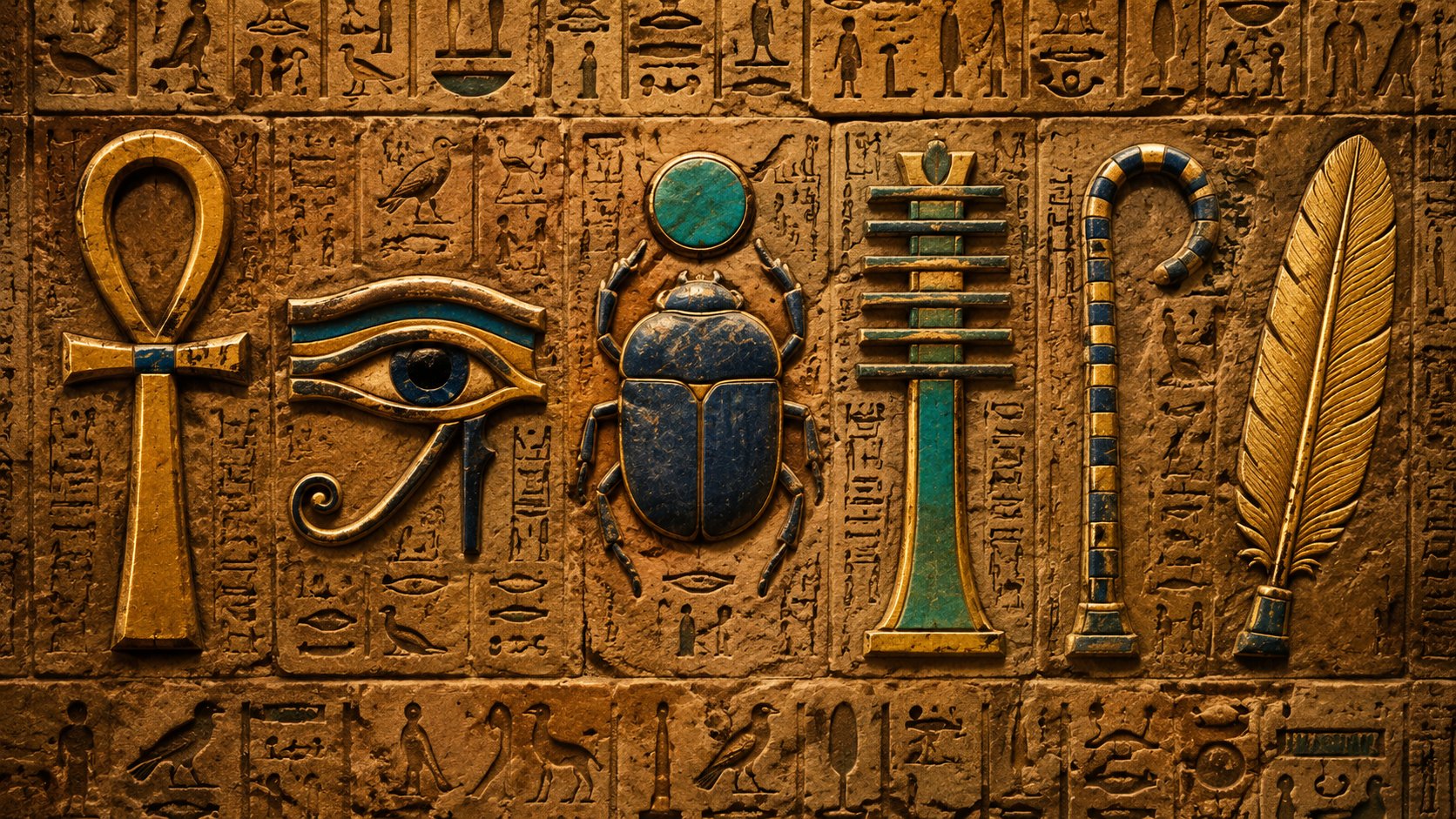
Ancient Egyptian Symbols and Names are among the most fascinating parts of one of the world’s oldest civilizations. Ancient Egyptians used symbols to represent gods, power, protection, life, death, wisdom, and the afterlife. These symbols appeared in temples, tombs, jewelry, hieroglyphics, and religious ceremonies.
Many people search for Ancient Egyptian Symbols and Names because these symbols continue to influence modern art, spirituality, history, and popular culture. Each symbol carried a unique meaning and played an important role in Egyptian society.
Today, these ancient symbols remain some of the most recognizable symbols in human history.
Ancient Egyptian Symbols and Names: Quick Answer
| Symbol Name | Meaning |
|---|---|
| Ankh | Life and immortality |
| Eye of Horus | Protection and healing |
| Scarab Beetle | Rebirth and transformation |
| Djed Pillar | Stability and strength |
| Was Scepter | Power and authority |
| Shen Ring | Eternity and protection |
| Tyet Knot | Divine protection |
| Uraeus Cobra | Royal power |
| Feather of Ma’at | Truth and justice |
| Ba Bird | The soul |
| Ka Symbol | Life force |
| Sesen Lotus | Rebirth and purity |
| Bennu Bird | Renewal and resurrection |
| Crook and Flail | Kingship and leadership |
| Solar Disk | Divine power |
Why Were Symbols Important in Ancient Egypt?
Ancient Egyptians believed symbols possessed spiritual and magical power.
Symbols were used to:
- Protect people
- Honor gods
- Guide souls in the afterlife
- Represent royal authority
- Communicate religious beliefs
Because many Egyptians could not read complex texts, symbols helped communicate important ideas visually.
The Ankh: Symbol of Life
The Ankh is one of the most famous Ancient Egyptian Symbols and Names.
It resembles a cross with a loop at the top.
Meaning of the Ankh
The Ankh symbolizes:
- Eternal life
- Immortality
- Divine energy
- Spiritual existence
Egyptian gods are often shown holding the Ankh, representing their power to grant life.
The Eye of Horus: Symbol of Protection
The Eye of Horus is another widely recognized Egyptian symbol.
It originated from the myth of Horus, the sky god.
Meaning of the Eye of Horus
The symbol represents:
- Protection
- Healing
- Good health
- Restoration
Ancient Egyptians frequently wore Eye of Horus amulets for safety and protection.
The Scarab Beetle: Symbol of Rebirth
The scarab beetle was highly respected in Ancient Egypt.
It was associated with Khepri, the god connected to the rising sun.
Meaning of the Scarab
The scarab symbolizes:
- Transformation
- Rebirth
- Renewal
- Creation
Many scarab amulets were buried with the dead to assist them in the afterlife.
The Djed Pillar: Symbol of Stability
The Djed Pillar was associated with the god Osiris.
Its unique shape made it one of the most important religious symbols in Egypt.
Meaning of the Djed Pillar
It represents:
- Stability
- Strength
- Endurance
- Resurrection
The Djed Pillar was often used in ceremonies celebrating renewal and life.
The Was Scepter: Symbol of Power
The Was Scepter appears frequently in Egyptian art.
Gods and rulers are often depicted carrying it.
Meaning of the Was Scepter
The symbol represents:
- Authority
- Power
- Control
- Divine rule
It became a symbol of leadership throughout Egyptian history.
The Shen Ring: Symbol of Eternity
The Shen Ring is a circular symbol without a beginning or end.
Meaning of the Shen Ring
The Shen Ring symbolizes:
- Eternity
- Protection
- Completeness
- Infinite life
Its circular shape reflected the Egyptian belief in endless existence.
The Tyet Knot: Symbol of Protection
The Tyet Knot is sometimes called the Knot of Isis.
It resembles the Ankh but has a different design.
Meaning of the Tyet Knot
It symbolizes:
- Protection
- Fertility
- Divine blessings
- Female power
The symbol was closely connected to the goddess Isis.
The Uraeus Cobra: Symbol of Royal Authority
The Uraeus is the upright cobra seen on royal crowns.
Meaning of the Uraeus
The symbol represents:
- Kingship
- Protection
- Sovereignty
- Divine authority
Egyptian rulers wore the cobra symbol to demonstrate their connection to the gods.
The Feather of Ma’at: Symbol of Truth
Ma’at was the goddess of truth and justice.
Her feather became one of the most important Ancient Egyptian Symbols and Names.
Meaning of the Feather
It symbolizes:
- Truth
- Justice
- Balance
- Moral order
According to Egyptian beliefs, hearts were weighed against the feather after death.
The Lotus Flower: Symbol of Rebirth
The lotus flower held special meaning because it opens during the day and closes at night.
Meaning of the Lotus
The lotus symbolizes:
- Rebirth
- Purity
- Creation
- Spiritual awakening
It frequently appeared in Egyptian artwork and temple decorations.
The Bennu Bird: Symbol of Resurrection
The Bennu Bird is often compared to the phoenix.
Meaning of the Bennu Bird
The symbol represents:
- Renewal
- Resurrection
- Creation
- Life cycles
Many scholars believe the phoenix legend may have been inspired by the Bennu Bird.
Crook and Flail: Symbols of Kingship
The crook and flail were carried by Egyptian pharaohs.
Meaning of the Crook and Flail
Together they symbolize:
- Leadership
- Guidance
- Authority
- Responsibility
They became enduring symbols of royal power.
The Solar Disk: Symbol of Divine Power
The Solar Disk represented the sun god Ra.
Meaning of the Solar Disk
It symbolizes:
- Creation
- Light
- Divine energy
- Life
The sun played a central role in Egyptian religion and daily life.
Why Do Ancient Egyptian Symbols Remain Popular?
Ancient Egyptian Symbols and Names continue to attract interest because they combine history, spirituality, and artistic beauty.
They appear in:
- Jewelry
- Tattoos
- Literature
- Movies
- Architecture
- Educational materials
Their meanings remain relevant because they address universal themes such as life, protection, wisdom, and transformation.
Frequently Asked Questions
What is the most famous Egyptian symbol?
The Ankh is widely considered the most famous Egyptian symbol and represents life and immortality.
What does the Eye of Horus symbolize?
The Eye of Horus symbolizes protection, healing, and restoration.
What is the Egyptian symbol for eternal life?
The Ankh is the primary Egyptian symbol associated with eternal life.
What does the scarab beetle represent?
The scarab symbolizes rebirth, transformation, and renewal.
Why are Egyptian symbols still popular today?
They remain popular because of their rich history, spiritual meanings, and artistic appeal.
Learn more about Ancient Egyptian civilization